
Limestone County Criminal Court Records
A criminal court record begins when an accusation is filed in court. Limestone County Circuit Clerk Kelly Davis is the official record keeper and business manager for proceedings in the county's Circuit and District Courts. The Criminal division preserves the pleadings, notices, court settings, orders, financial entries, and final action in each case. That court file can connect an initial complaint or indictment to arraignment, bond rulings, motions, subpoenas, a plea or trial, and the sentence. It is the right source when the key question is what happened in court, not merely whether an arrest took place.
Limestone County is Alabama's 39th Judicial Circuit. Circuit Court has general jurisdiction over felony prosecutions and also hears misdemeanors or municipal ordinance violations that arise from felonies. District Court handles misdemeanor prosecutions, preliminary hearings in felony cases, and certain non-capital felony guilty pleas before indictment. Athens Municipal Court separately handles Athens ordinance and municipal cases. The issuing court therefore determines where a Limestone County criminal record is kept and which office can certify it.
The Limestone County District Attorney's official site identifies the local prosecution office and its victim services.
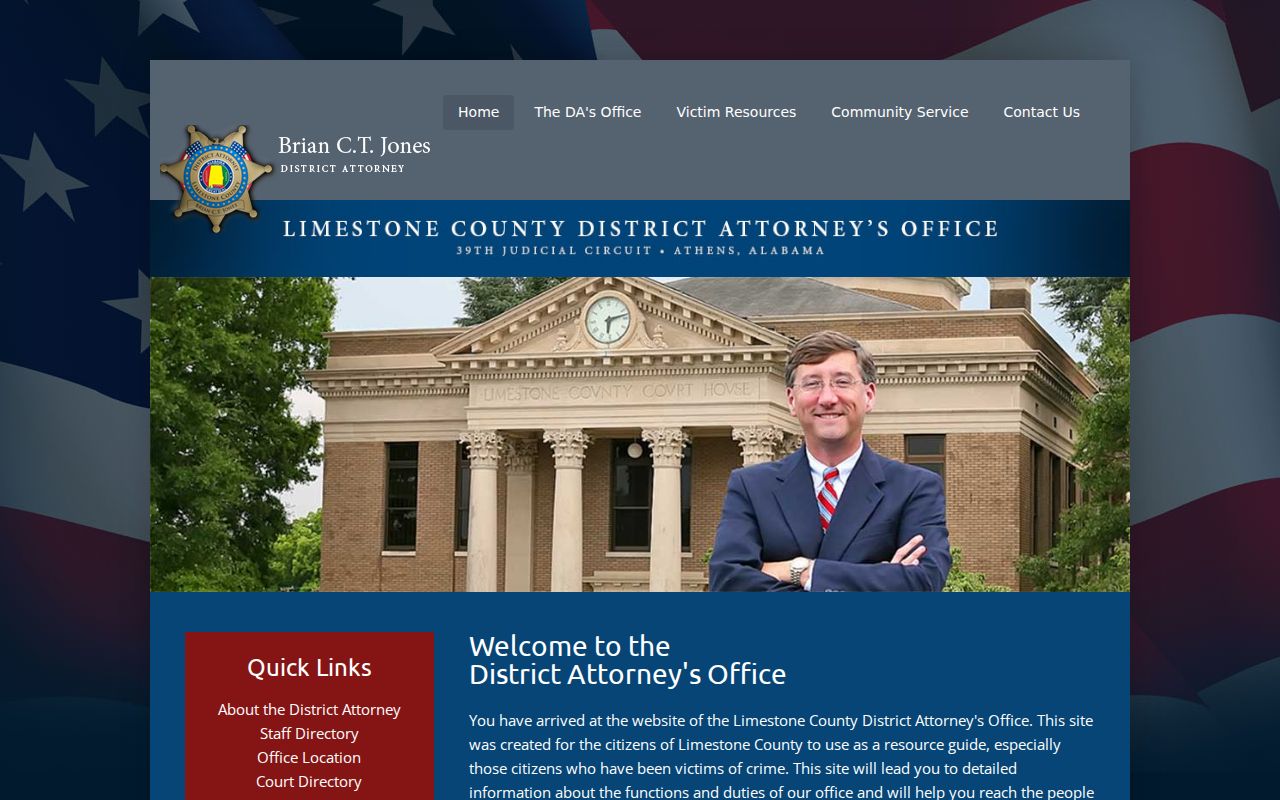
The office's role in felony and some misdemeanor cases explains why its charging decisions become entries in the clerk's criminal case file.
Search Limestone County Criminal Records
Just One Look provides paid, on-demand access to Alabama state trial-court records. It supports name and case-number searches across criminal and other case divisions. Limestone County court dates also appear through the free daily docket for county 58. Choose a setting date, add a last name if useful, and run the search. The last-name field is optional, so leaving it blank returns the full docket for the selected date. The docket warns that some cases may not appear electronically.
- Start with Just One Look for the full Limestone County criminal case or the daily docket for a near-term court setting.
- Search by the defendant's name or known case number. Confirm the criminal division, court, and filing year.
- Read the charge entries and docket in date order. Look for later amendments, pleas, orders, and disposition entries.
- Check sentence, costs, restitution, probation, and bond fields only after confirming the final disposition.
- Request a plain or certified copy from the Circuit Clerk when an online view is incomplete or an official copy is needed.
The offline fallback is Kelly Davis and the Circuit Clerk at the Limestone County Courthouse, 200 Washington Street West, Athens, AL 35611, or (256) 233-6406. Court offices are open Monday through Friday from 8:00 a.m. to 4:30 p.m. and close from noon to 1:00 p.m. The local Alacourt number is (256) 216-3865. For an Athens city case, contact Athens Municipal Court at (256) 233-8733 or court@athensal.us rather than assuming the state-court portal holds the complete municipal record.
Note: A blank electronic docket is not proof that a Limestone County criminal case does not exist.
Limestone County Criminal Case Flow
Each stage creates a different kind of entry. A complaint, information, or indictment states the accusation. Arraignment records the defendant's formal response. Pretrial activity can include bond review, discovery disputes, motions, subpoenas, continuances, and hearing notices. A guilty plea or trial then leads to a disposition. If there is a conviction, the file may add a sentencing order, probation terms, restitution, fines, costs, or incarceration information.
Case flow: Charges Filed › Arraignment › Pretrial and Motions › Plea or Trial › Disposition › Sentencing
District Court may hold the first record in a felony matter through a preliminary hearing. A later indictment can place the main prosecution in Circuit Court. That shift is why a search should follow both the case number and court division instead of relying on a single early docket entry. The court record may also show a transfer, consolidation, appeal, or new setting before it reaches a final outcome.
The official District Attorney biography identifies Brian C.T. Jones as the elected prosecutor for the 39th Judicial Circuit.
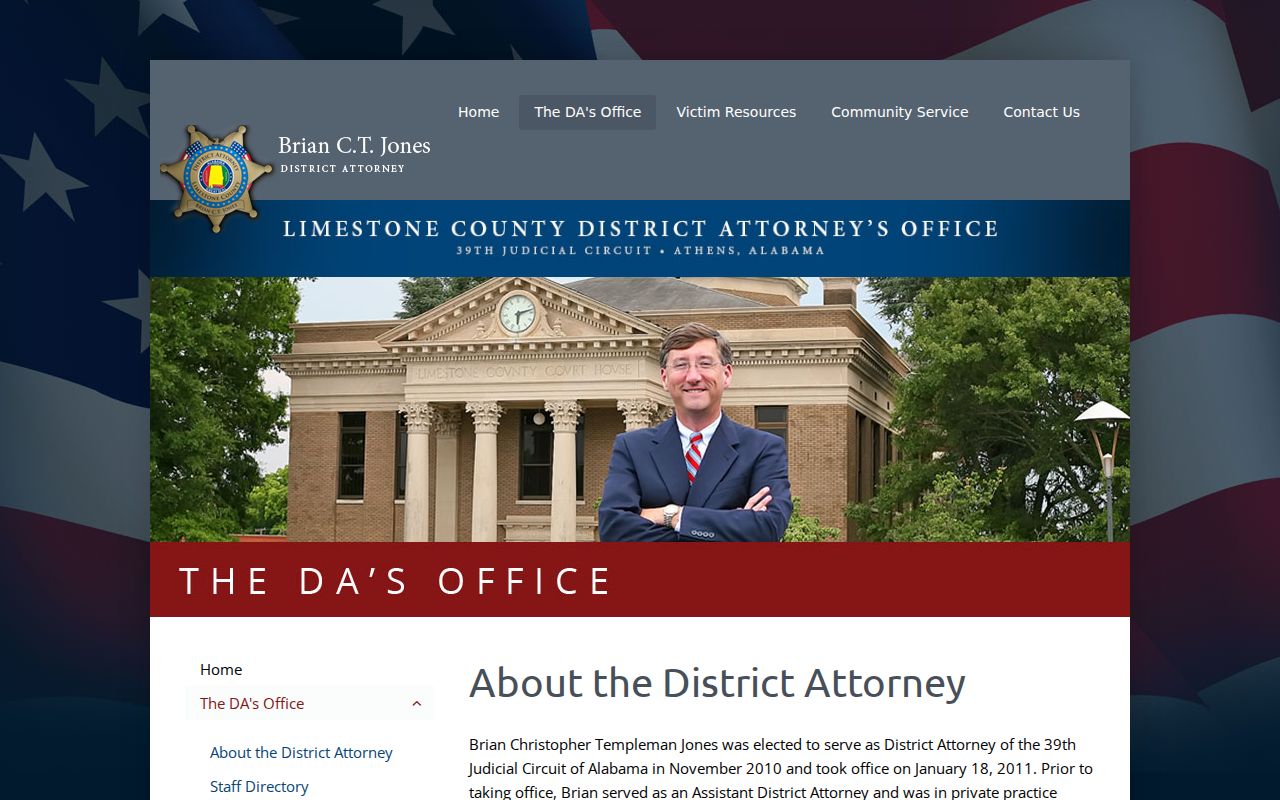
That office's actions may appear as filed charges, amended accusations, plea terms, or a request that a charge be dismissed.
What Limestone County Criminal Records Show
A Limestone County criminal court record combines identity, case tracking, court events, outcomes, and financial data. Not every field appears in every case. Online access can also be narrower than the clerk's official file, especially when documents have not been imaged or a protected detail must be redacted.
| Field | What It Shows |
|---|---|
| Case number | County, division, filing year, sequence, and extension used to track the action. |
| Defendant and court | Named accused person plus the Circuit, District, or municipal venue handling the case. |
| Charges | Filed offense descriptions and later amended, reduced, dismissed, or added counts. |
| Docket events | Arraignment, motions, subpoenas, hearings, continuances, plea, trial, and orders. |
| Disposition | The result of each charge, such as guilty, not guilty, dismissed, or still pending. |
| Sentence and money | Incarceration, probation, restitution, fines, costs, and other terms when imposed. |
Read the most recent event and the disposition for each count. One case may contain several charges with different results. A sentence applies only after a conviction, while bond is security meant to support appearance before the case ends.
Limestone Charges and Convictions Compared
A charge is an accusation. It is not proof of guilt. A conviction is a court result reached by a guilty plea or verdict. Limestone County criminal records may preserve both the original accusation and its later outcome, including an acquittal, dismissal, amendment, or reduction. For a closer focus on the arrest-to-filing path, see the county's arrest records and court charges.
| Point | Charge | Conviction |
|---|---|---|
| Meaning | A formal accusation filed against a defendant. | A guilty plea or guilty verdict entered by the court. |
| Timing | Appears near the start and may later change. | Appears at disposition after plea or trial. |
| What to verify | Current status for each count. | Sentence and final orders tied to that count. |
Felonies are defined in the local jury glossary as offenses punishable by at least one year and one day in prison. Misdemeanors may be punished by up to one year in county jail or a fine. The label helps identify court path and severity, but the disposition remains the key fact.
Read Limestone County Case Outcomes
Disposition is the outcome or current resolution of a charge. Guilty means the court entered a conviction after plea or verdict. Not guilty means the fact finder did not convict. Dismissed means the charge ended without a conviction at that stage. A pending label means the court has not yet entered a final result. Continuances and settings are schedule events, not outcomes.
A Limestone County sentencing entry may list custody, probation, restitution to a victim, fines, court costs, or other conditions. Read it with the judgment and the charge-level disposition. Financial balances can change after payment, and probation terms may be set in a separate order. Certified copies should come from the Circuit Clerk when the result will be used in a formal filing. Sheriff Joshua McLaughlin's office keeps custody and booking data, which remains distinct from the clerk's final case record.
The Alabama Office of Indigent Defense Services describes the state system that supports court-appointed representation.
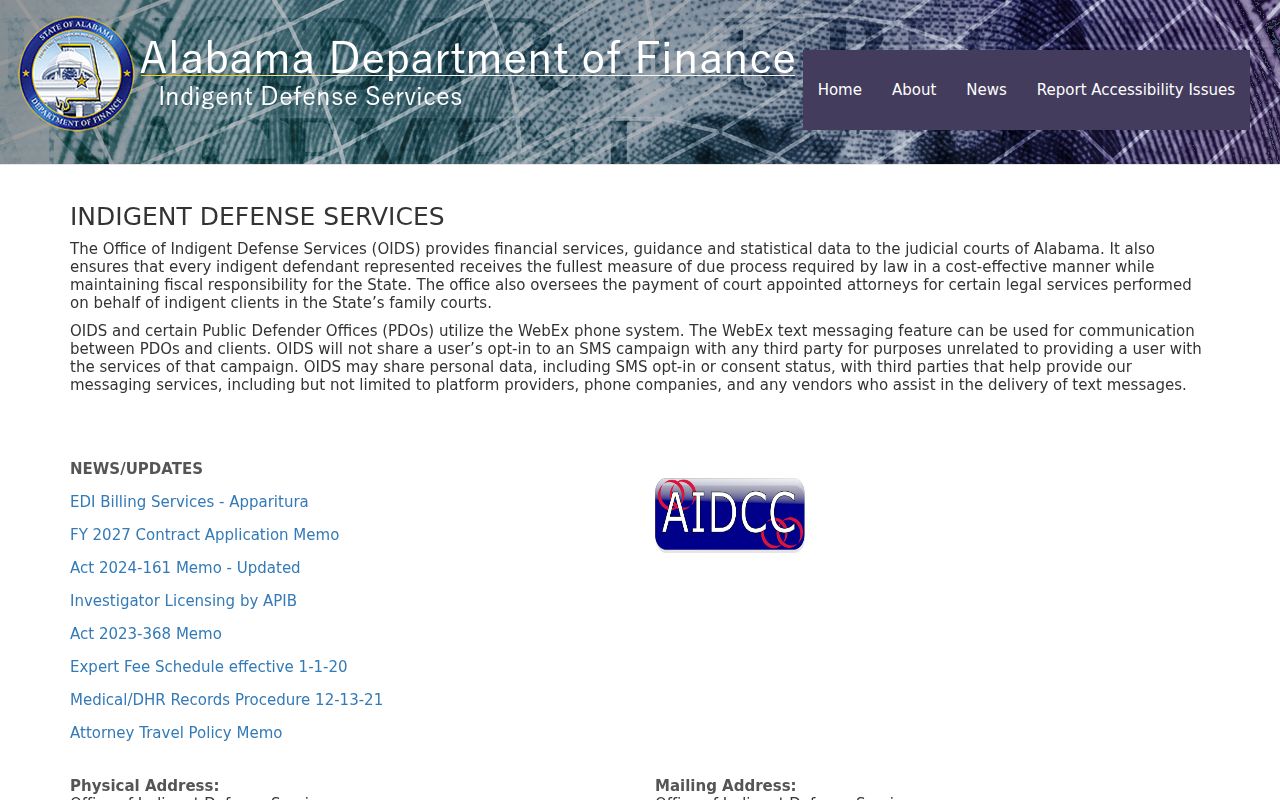
Limestone County defendants who cannot afford counsel may ask the court about appointment, while clerk staff may explain procedure but cannot give legal advice.
Public Limestone County Criminal Records
Ala. Code Section 36-12-40 gives Alabama citizens a right to inspect and copy public writings unless another law provides otherwise. Section 36-12-41 works with that inspection right and copy-fee rules. The practical route is to ask the record-owning office. Kelly Davis and the Limestone County Circuit Clerk hold Circuit and District criminal files; the Athens Municipal Court holds its own city matters.
Access includes paid Just One Look, the free daily docket, an in-person clerk request, phone help, and a written request that identifies the case name, number, date, document, and whether certification is needed. An online record may omit scanned pleadings or sensitive fields. Clerk staff can locate and copy records, but they cannot advise what motion to file or how a court order affects a person.
Restricted Limestone Criminal Court Records
Alabama law limits public access to juvenile, sealed, expunged, and other protected material. Ala. Code Section 12-15-133 makes juvenile court records confidential except for allowed access. Social Security numbers, account data, minor identities, and similar private details should be redacted from public copies. An ongoing matter may also contain material that is not available through the public view.
Sealing restricts access under a court order or law. Expungement is a petition process governed by Alabama Title 15, Chapter 27, and it does not occur automatically when a charge is dismissed. Eligibility depends on the charge, result, waiting period, and statutory conditions.
| Point | Sealed | Expunged |
|---|---|---|
| Public view | Restricted from ordinary public access. | Removed from normal public access under the order and statute. |
| How it occurs | By court order or a specific confidentiality rule. | Through an eligible petition and court order. |
| Agency access | May remain available where law permits. | Limited statutory criminal-justice access may remain. |
The Alabama expungement eligibility statute is the official starting point for checking eligible criminal charges.
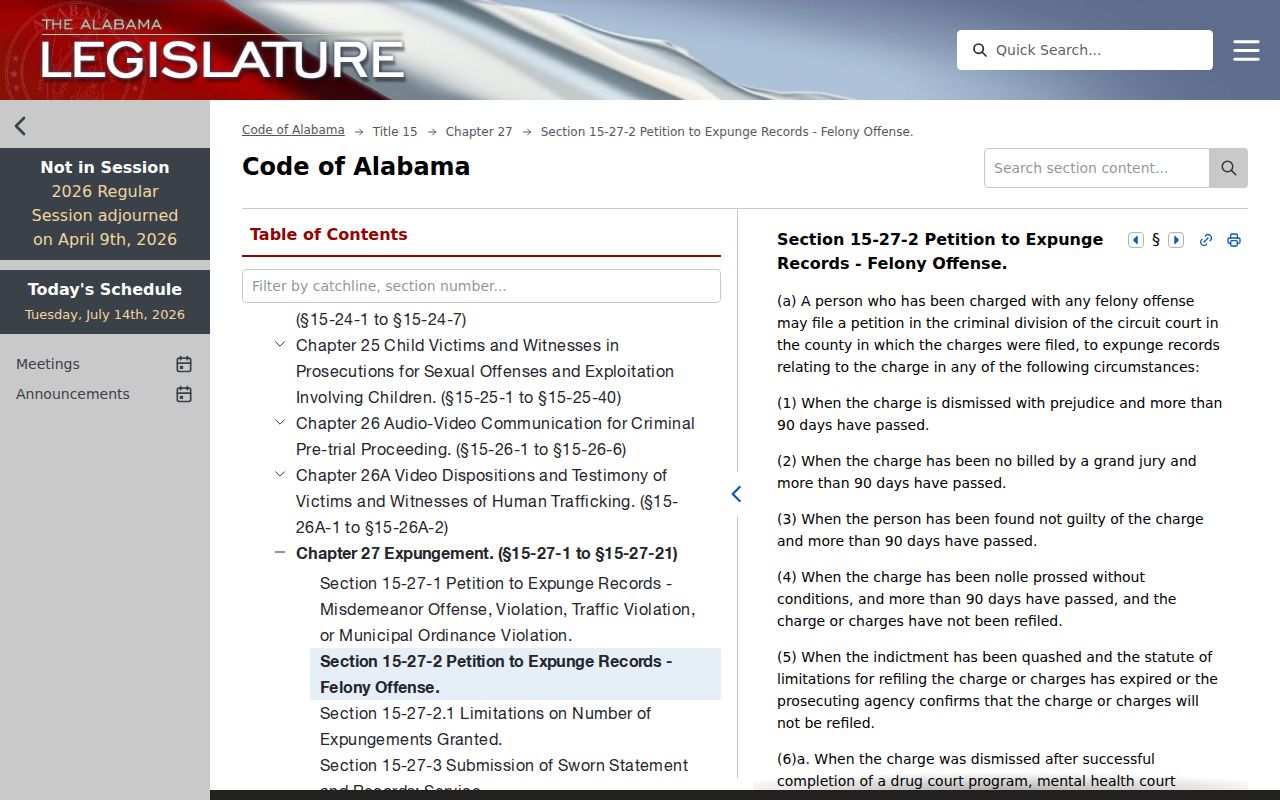
The statute image reinforces why a missing public result should not be treated as proof of either expungement or a clear record.